All posts in Home Page Slider

Join the NPPR’s Work Group Research, Technology and Energy, as they work on a project to develop a 101 Green Chemistry Guide for P2 Practitioners!
Michael Simpson, Sr. Environmental Engineer for the City of Los Angeles and NPPR Board Member is looking to put together a green chemistry workgroup to develop a 101 Green Chemistry Guide for P2 Practitioners. The committee estimates this effort to bring a manual ready for use will take approximately one year. He’s looking for P2 TAPs who have experience working in the field with green chemistry and have access to case studies and success stories. He’s also looking for individuals with experience with technical manuals or technical guides. Phone (323) 342-6047 or email michael.simpson@lacity.org.

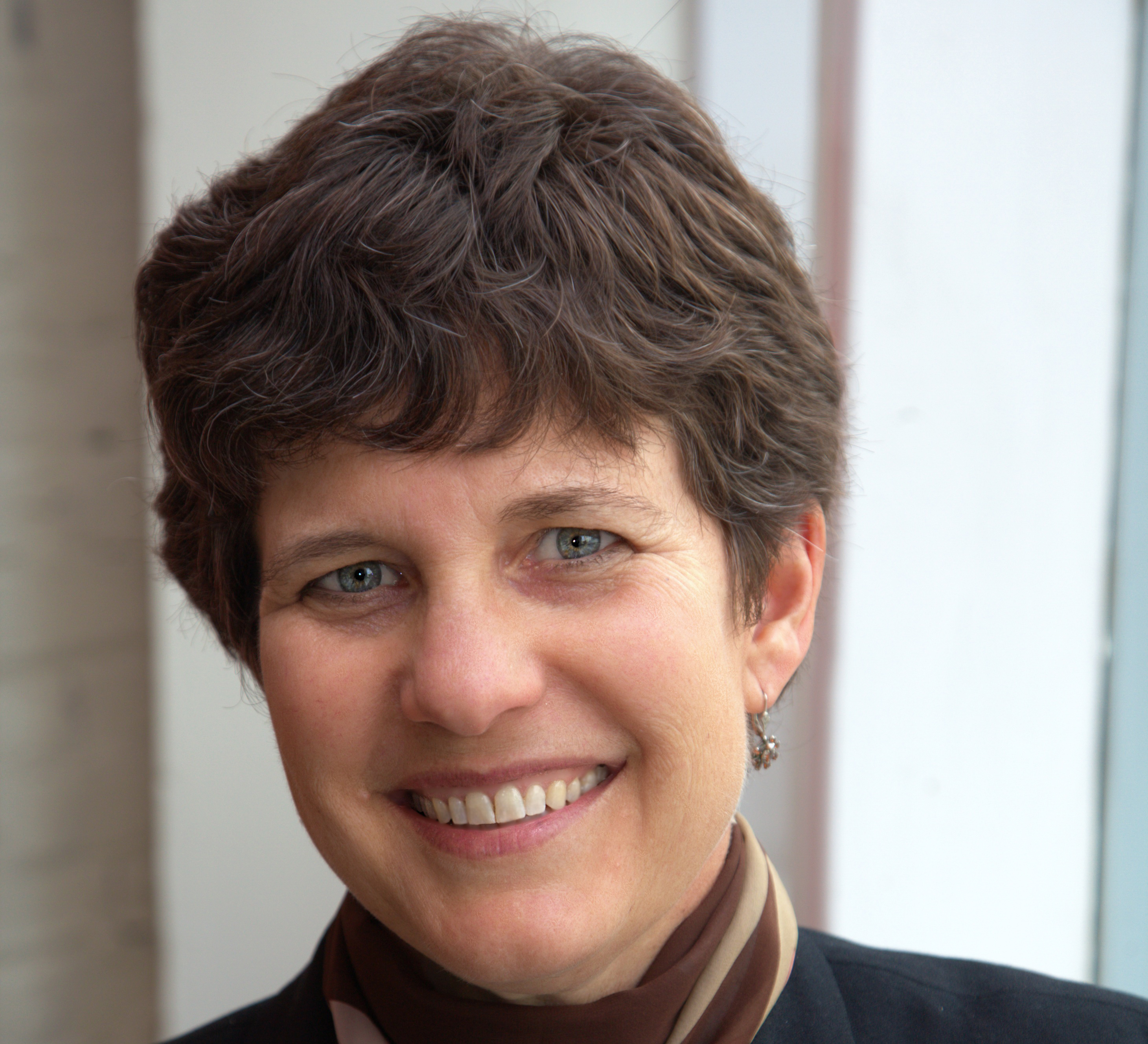
Debbie Raphael, Director of California’s Department of Toxic
Substances Control, has spent the last 20 years working for the
cities of Santa Monica and San Francisco, and has dedicated her
professional career to creating partnerships that protect human
health and the environment by managing the use of chemicals in
commerce. (see full bio below)

(reprinted with permission of GreenBiz.com)

By Deborah Raphael, Director, California Department of Toxic Substances Control

Twenty-two years ago, the Pollution Prevention Act marked a significant change in how we manage hazardous waste. Shifting away from an “end of the pipe” approach to controlling chemical hazards, it focused on controlling those hazards at their source and marked a major change in how we think about protecting our health and preserving the environment.

Today we are in the midst of another change, one that will further the vision of pollution prevention by advancing efforts to find safer alternatives to toxic ingredients in consumer products.

Building on the foundational efforts of several countries and at least four states in the U.S., California has released the nation’s first comprehensive approach for reducing toxics in products. Our proposed Safer Consumer Products Regulation requires manufacturers to ask the questions: “Is this toxic ingredient necessary?” and “Is there a safer alternative?”

The regulation takes pollution prevention to a higher level. ”P2”programs well understood that finding safer alternatives for the toxic chemicals in our products provides a long-lasting sustainable approach to environmental protection. Instead of reducing the use of chemicals that threaten our health and contaminate our environment, our new approach mandates the rethinking of ingredients during the design phase of a product. That mandate is a fundamental change in the way the department regulates toxics in consumer products.

The alternative assessment process is an essential component of this effort. The assessment affects manufacturers whose products contain one or more ingredients designated as

a “chemical of concern” that has the ability to cause health or environmental impacts and where there is evidence of exposure. Boiled down to its most essential element, the assessment is meant to determine if a particular toxic ingredient is necessary, and to compare that ingredient with alternatives, giving consideration to life cycle impacts; impacts on product function; performance and legal requirements; and economic impacts.

If a safer alternative is not feasible, or cannot be found, the department is now authorized to impose a number of regulatory responses including mandating end-of-life management, use restrictions, engineering or administrative controls, the funding of research to design safer alternatives, and ultimately a ban on sales in California.

Those following our efforts have witnessed a difficult journey. Like all new approaches, the proposal sparked the passion of industry, environmental and health groups. Since 2008, when the enacting law was signed, debate over the specific language has generated many drafts of the regulation, and volumes of public comments. With an understanding that our proposal breaks new ground (coupled with limitations on budgetary resources), our proposal sets forth the modest goal of initially looking at no more than five “priority” products.

It’s a modest beginning to be sure, but it’s also a significant one. Like the visionaries who laid out the principles of pollution prevention more than two decades ago, we understand that we are part of an evolutionary process. Today new visions point us to a time when we focus less on avoiding “chemicals of concern” and instead turn to processes and ingredients that mimic nature to produce truly non-toxic and biodegradable products.

Twenty-two years later, pollution prevention is still an essential part of our efforts to protect the environment, and this year’s Pollution Prevention Week theme – “Safer Chemicals for a Safer World,” demonstrates how far our thinking has evolved. While we will never step away from encouraging “P2” efforts in various industry sectors, California has the opportunity to put the mandatory “shall” into safer product design and to make our world safer by reducing toxic chemicals and creating that safe and sustainable vision laid out in 1990.

Debbie Raphael, Director of California’s Department of Toxic Substances Control, has spent the last 20 years working for the cities of Santa Monica and San Francisco, and has dedicated her professional career to creating partnerships that protect human health and the environment by managing the use of chemicals in commerce. She has forged alliances between diverse stakeholders in order to build support for benchmark environmental initiatives, which in many cases have been replicated across the nation.

Raphael is recognized internationally as the architect of San Francisco’s groundbreaking Precautionary Principle legislation and spearheaded the citywide adoption of a precautionary approach to environmental decision-making.

Raphael takes a pragmatic approach to chemical regulation. She relies on the best available science when designing and implementing programs, including San Francisco’s award-winning Integrated Pest Management, Environmentally Preferable Purchasing, Green Business Certification, and Green Building programs. She has successfully crafted and implemented local legislation regulating toxic chemical content in consumer products including phthalates in children’s products and mercury in fever thermometers.

Raphael has been at the forefront of a statewide effort to reformulate consumer products through product re-design, incentives, and consumer right-to-know efforts. Working with sectors such as garment cleaning, wood preservatives, dental offices, nail salons, and janitorial services to identify safer alternatives to the use of hazardous chemicals. She served as co-chair of California’s AB1109 Taskforce and Green Ribbon Science Panel, advising the state on issues around end-of-life management of fluorescent lights and the development of Green Chemistry regulations. She has been part of numerous statewide efforts to craft policy on hazardous waste management and extended producer responsibility.

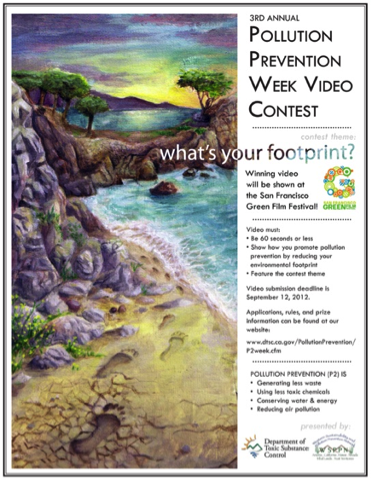
The Pollution Prevention Week 2012 Video Contest asked, “What’s your footprint?”


Winners will be announced in September 2012! The overall winning video will be screened at the 2013 San Francisco Green Film Festival. The winner will also receive accommodations at the Galleria Park Hotel in San Francisco during the weekend of the screening!


See Winning Videos from Last Year’s Contest.
The 2011 contest sponsored by WSPPN and DTSC attracted 39 video entries–almost three times as many as the previous year. We congratulate the students at Violet Heintz Education Academy for their outstanding achievement and support for Pollution Prevention Week 2011 through their winning entry – “Its Starts with Me, The Time is Now!” See winning video and top entries for 2011 Contest.